From Production Floor to Balance Sheet
— All Connected in One Odoo System.
Bills of materials, work orders, production scheduling, quality control, inventory management, and AI-powered production planning — configured specifically for manufacturers across UAE, UK, Australia, and India.
Manufacturing is where ERP complexity is highest — and where the right setup creates the most competitive advantage.
A single production order touches procurement, inventory, capacity planning, quality control, cost accounting, and customer fulfilment — simultaneously.
Manufacturing businesses operate across more moving parts than almost any other industry. The margin between profit and loss often comes down to how accurately you can track material costs, labour, machine time, and scrap against actual production output.
The manufacturers that run profitably share one characteristic:
They know their true cost of production before they quote a customer. Not estimated from last year's rates. Not approximated from supplier prices. Actual — including every raw material, every labour hour, every machine minute, and every overhead allocation tied to a specific production order.
Most ERP implementations for manufacturers miss this.
They configure the modules, set up the BOMs, and call it done. Three months later the production team is still using whiteboards, the inventory team doesn't trust the system's stock positions, and the finance team is reconciling costs manually at month end.
Rootlevel configures Odoo for the operational reality of manufacturing — production floor to balance sheet, connected and accurate.
Eight ways a generic Odoo setup fails a manufacturing business.
BOMs that don't reflect real production
Bills of materials configured generically — without variants, without by-products, without scrap factors, without version control. The BOM in the system doesn't match what actually gets consumed on the production floor. Material cost calculations are wrong from the start.
Work orders nobody follows
Work order routing configured without understanding actual machine sequences, operator requirements, or realistic cycle times. Production staff ignore the system and follow paper travellers instead. The ERP has no idea what's actually happening on the floor.
Inventory positions that don't match reality
Raw material stock, WIP (work-in-progress) inventory, and finished goods are tracked separately — or not tracked at all as they move through production stages. The inventory team doesn't trust system stock levels and physically counts before every production run.
Production costs calculated monthly, not by order
Standard costing used as a shortcut — every product gets the same cost regardless of actual material consumption, actual scrap, actual machine time, or actual labour. Real cost variance is invisible until month-end. By then it's too late to act on it.
Quality control disconnected from production
Quality checks performed manually, results recorded on paper or in spreadsheets, no connection to production orders or supplier records. Defects get through to customers. Supplier quality issues aren't tracked. Scrap isn't costed correctly.
Procurement driven by instinct, not by demand
Purchase orders raised based on experience and habit rather than actual production demand signals. Materials arrive too early (tying up cash) or too late (stopping the production line). MRP is either not configured or not trusted.
Capacity planning done manually
Machine capacity, operator availability, and production scheduling managed on whiteboards, spreadsheets, or in someone's head. Production managers can't answer 'can we take this order?' without a manual capacity calculation.
Finished goods costing inaccurate
The cost of a finished product should reflect every material consumed, every labour hour applied, every machine minute used, and an appropriate allocation of overhead. In a generic setup, it reflects only the standard BOM at standard rates.
Every Odoo manufacturing capability — configured for production floor reality.
Bills of Materials — Production-Accurate
BOMs configured to reflect actual production requirements — with variants, by-products, scrap factors, and version control. Multiple BOM types for different production methods. Kit BOMs for assembly operations. Phantom BOMs for sub-assemblies that aren't stocked separately.
BOM variants, by-product configuration, scrap factor setup, BOM version control, phantom and kit BOM types, BOM cost simulation.
Work Orders & Routing
Work order routing configured with actual machine sequences, realistic cycle times, operator skill requirements, and quality control checkpoints built into the production flow. Production staff follow the system because it reflects what they actually do.
Operation routing, cycle time configuration, machine and operator assignment, quality checkpoints in routing, work order instructions.
Production Scheduling & Capacity Planning
Production scheduling configured with real capacity constraints — machine capacity, operator availability, shift patterns. The scheduler considers actual available capacity when generating production plans. Production managers can answer 'can we take this order?' from the system.
Machine capacity configuration, shift patterns, production scheduling rules, capacity reporting, MPS (Master Production Schedule) setup.
MRP — Manufacturing Resource Planning
MRP configured to generate purchase and production suggestions based on actual demand signals — confirmed sales orders, forecasts, safety stock levels, and production schedules. Buying decisions driven by real demand, not habit.
MRP rules, demand forecasting integration, lead time configuration, safety stock levels, MRP simulation and approval workflow.
Quality Control
Quality control integrated directly into production workflows — incoming inspection on raw materials, in-process quality checks at defined production stages, and finished goods inspection before dispatch. Quality results recorded in the system.
Quality control points, inspection methods, quality alert management, supplier quality tracking, scrap and rework workflows.
Manufacturing Inventory Management
Inventory management configured for manufacturing complexity — raw materials, packaging, WIP (work-in-progress), semi-finished goods, and finished products tracked accurately through every production stage. Serial number and lot tracking for full traceability.
Multi-stage inventory tracking, serial/lot traceability, WIP accounting, scrap location management, inventory valuation by stage.
Production Cost Accounting
Actual cost accounting configured per production order — every material consumption, every labour hour, every machine minute, and overhead allocation tracked and reported by order. Variance analysis between standard and actual costs visible at production order level.
Actual vs standard cost variance, overhead absorption rates, labour cost tracking, machine cost allocation, production order profitability reporting.
Subcontracting Management
For manufacturers who subcontract part of their production — subcontracting workflows configured in Odoo. Materials sent to subcontractor tracked. Subcontractor invoices matched to production receipts. Subcontracted operations costed correctly into finished goods.
Subcontracting BOM type, material tracking to subcontractor, subcontractor invoice matching, subcontracted cost allocation.
Where AI and automation create the most value on the production floor.
AI-Powered Production Planning
AI analyses order backlog, current stock positions, machine capacity, and supplier lead times to suggest optimal production schedules — minimising changeover time, maximising machine utilisation, and ensuring materials are available before production starts.
Predictive Maintenance Alerts
AI monitors machine run hours and maintenance history to predict when preventive maintenance is due — before a breakdown stops the line. Maintenance work orders generated automatically at the right time, not reactively after failure.
Automated Material Replenishment
When raw material stock falls below the reorder point that MRP has calculated, a draft purchase order is created automatically — correct supplier, quantity, and lead time factored in. Your procurement team reviews and approves.
Production Performance Reporting
Automated daily production summary — units produced, scrap rate, OEE (Overall Equipment Effectiveness), cost variance — delivered to production managers every morning without manual data assembly. Decisions made on yesterday's data.
Quality Anomaly Detection
AI monitors quality inspection results across production orders and flags when defect rates deviate from normal — identifying whether the issue is a specific machine, operator, or batch of raw material. Problems identified early.
Customer Order Status Automation
Automated updates to customers when their production order reaches key milestones — production started, quality passed, dispatched — via WhatsApp and email, triggered by real Odoo events. Sales team stops fielding status calls.
Odoo for manufacturing works best for businesses that need production floor visibility connected to financial accuracy.
Right for you if:
- You manufacture products with defined BOMs and production processes
- You need accurate production cost tracking — materials, labour, machine time, overhead
- Your current system can't connect production floor activity to inventory and finance
- You subcontract part of your production and need to track and cost it correctly
- You need quality control integrated into production — not managed on paper separately
- You're based in UAE, UK, Australia, or India and need local tax compliance built in
- You want AI-powered production planning and predictive maintenance
Probably not right if:
- You do purely project-based manufacturing with no repeatable BOM structure
- You want production modules configured without a proper discovery of your processes
- You're looking for a system that matches a poorly designed production process rather than improving it
From broken compliance and data chaos to a stable manufacturing operation — across 70+ users in India.
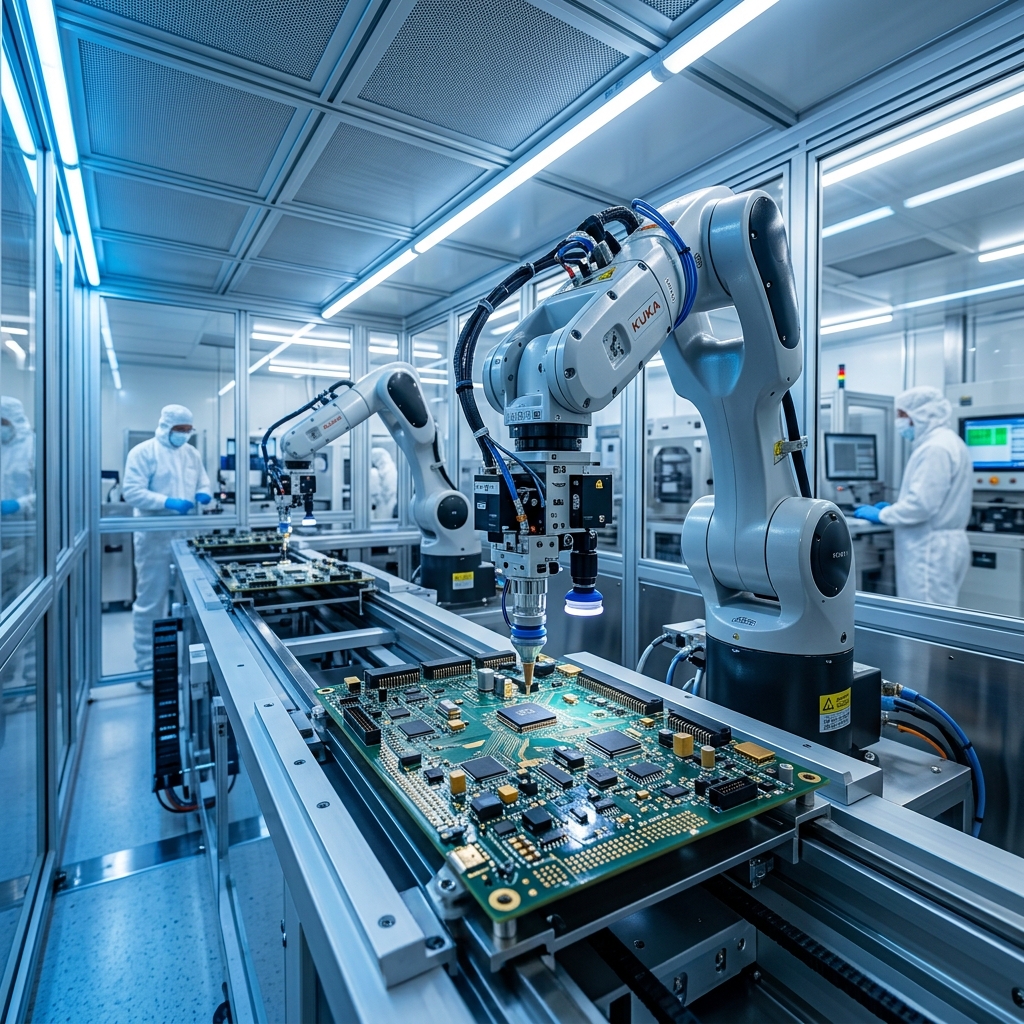
Electronics Manufacturing (EMS/PCB) — India
Major Indian manufacturer of high-precision SMT stencils for the PCB assembly industry — Odoo v11, 70+ users, multi-company Pan-India setup
A major Indian EMS manufacturer was running a broken Odoo v11 installation — GST compliance wrong at a fundamental level, multi-company data conflicts across their Pan-India manufacturing setup, an unmanaged server, and 200+ unresolved issues with 70+ users depending on a system that wasn't working.
We rescued the installation, rebuilt GST compliance from scratch, resolved all multi-company data conflicts, hardened and optimised the server, configured role-based access for 70+ users, and stabilised production and inventory management — then stayed as their long-term retainer partner delivering 200+ tasks in continuous engagement.
Results
- Production and inventory running live with manufacturing schedules
- Full Indian GST compliance — audit-ready
- Zero data chaos across all companies
- 70+ users operating with proper access control
The tools behind our solutions.
What manufacturing businesses ask before starting with Odoo.
Running a manufacturing business — and your production floor isn't connected to your ERP the way it should be?
Whether you need a fresh implementation, MRP that actually works, or production cost accuracy you can trust — we've delivered all three for manufacturers across UAE, UK, Australia, and India.